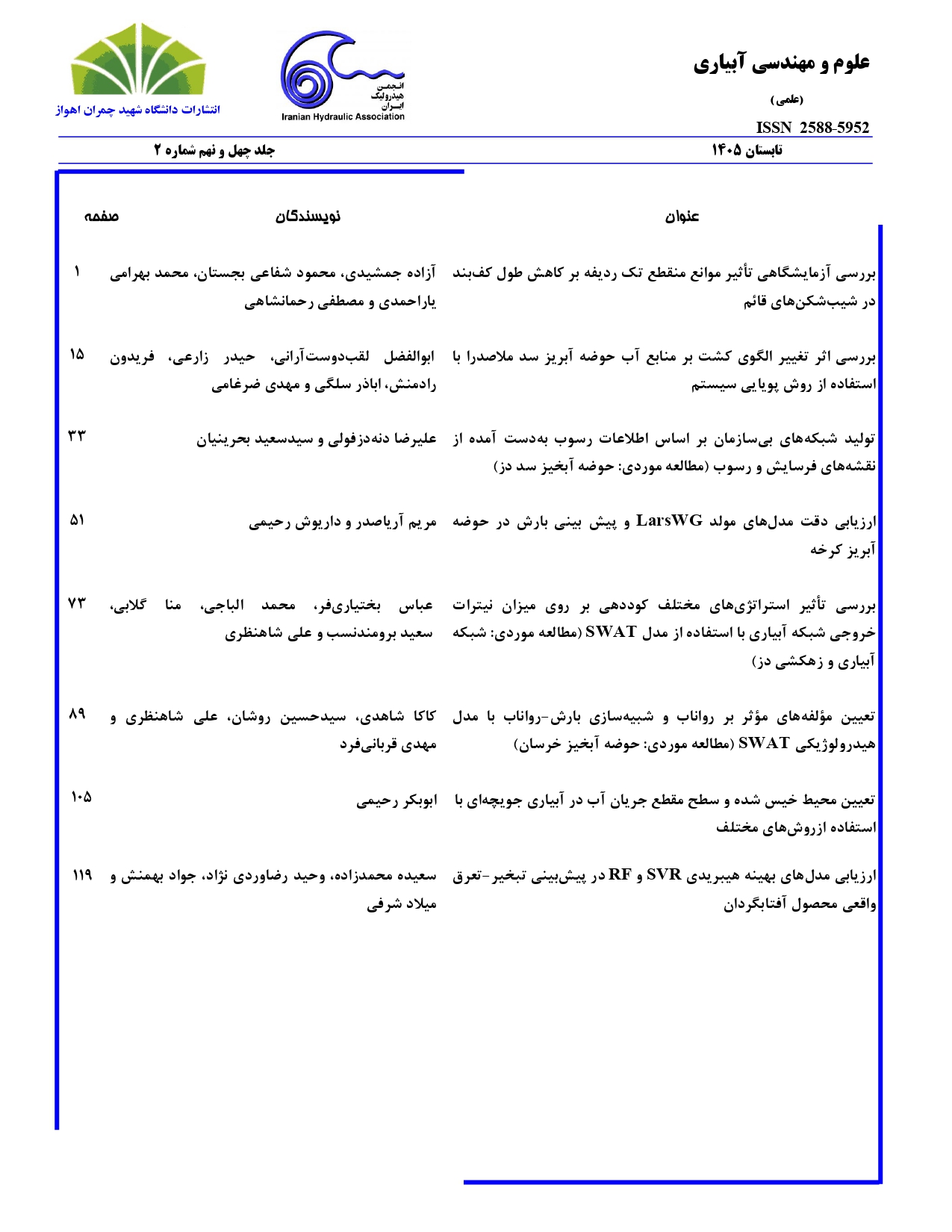
نوع مقاله : مقاله پژوهشی
نویسندگان
1
دانشجوی دکتری مهندسی منابع آب، دانشکده مهندسی آب و محیط زیست، دانشگاه شهید چمران اهواز.
2
استاد گروه هیدرولوژی و منابع آب، دانشکده مهندسی آب و محیط زیست، دانشگاه شهید چمران اهواز.
3
استاد گروه هیدرولوژی و منابع آب، دانشکده مهندسی آب و محیط زیست، دانشگاه شهید چمران اهواز
4
پژوهشگر پسا دکتری، گروه مهندسی علوم آب، دانشکده کشاورزی، دانشگاه بوعلی سینا، همدان.
5
استاد گروه مهندسی عمران آب، دانشکده مهندسی عمران، دانشگاه تبریز.
چکیده
یکی از نگرشهای مدیریتی، که در سالهای اخیر برای شبیهسازی سامانههای منابع آب، استفاده شده، پویایی سیستم است. در این تحقیق تلاش شده است با استفاده از پویایی سیستم، اقدام به شبیهسازی وضعیت منابع آبی حوضه سد ملاصدرا (در شمال استان فارس و جنوب کشور ایران) گردد. برای این منظور زیرسیستمهای اقتصادی، تغییرات سطح آب زیرزمینی، تغییرات حجم آب زیرزمینی، آب سطحی و کل سامانه در محیط نرم افزار VENSIM مورد بررسی قرار گرفت. شبیهسازی عملکرد آبخوانهای بالادست و پایین دست سد ملاصدرا و مخزن سد ملاصدرا طی سالهای 1388 الی 1399 بررسی شد. برای این منظور دوازده سناریو (گزینه مدیریتی) مختلف ارائه شد. نتایج بررسی گزینههای مدیریتی مختلف نشان داد در صورت عدم کشت برنج به طور کامل، و جایگزینی آن با محصول کنجد، درآمد کشاورزان منطقه پایین دست سد ملاصدرا به میزان 54 درصد افزایش میباید (گزینه مدیریتی 11). در این گزینه مدیریتی درآمد کشاورزان در پایین دست سد ملاصدرا بهطور متوسط 114 میلیون در سال خواهد بود. با این گزینه مدیریتی میتوان، ضمن مصرف آب کمتر، همان سطوح زیرکشتی که در شرایط فعلی در مناطق پایین سد ملاصدرا کشت میشود، را کشت نمود.
کلیدواژهها
موضوعات
عنوان مقاله English
Investigating the effect of changing the cropping pattern on Water Resources in Molla Sadra Dam Basin using the System Dynamics method
نویسندگان English
Abolfazl Laghbdost arani
1
Heidar Zarei
2
Freidon Radmanesh
3
Abazar Solgi
4
Mehdi Zarghami
5
1
Ph.D. Student, Department of Hydrology and Water Resources, Faculty of Water and Environmental Engineering, Shahid Chamran University of Ahvaz, Iran.
2
Professor, Department of Hydrology and Water Resources, Faculty of Water and Environmental Engineering, Shahid Chamran University of Ahvaz, Iran.
3
Associate Professor, Department of Hydrology and Water Resources, Faculty of Water and Environmental Engineering, Shahid Chamran University of Ahvaz, Iran
4
Postdoctoral Researcher, Department of Water Science Engineering, Faculty of Agriculture, Bu-Ali Sina University, Hamedan, Iran.
5
Professor, Department of Civil Engineering (Water), Faculty of Civil Engineering, Tabriz University, Tabriz, Iran.
چکیده English
System dynamics is a management approach that has been used in recent years for simulating water resources systems. In this study, an attempt was made to simulate the water resources status of the Molla Sadra Dam basin (located in the north of Fars Province, southern Iran) using the system dynamics approach. For this purpose, the economic subsystem, groundwater level fluctuations, groundwater volume changes, surface water, and the overall system were examined using VENSIM software. The performance of the upstream and downstream aquifers of the Molla Sadra Dam and the Molla Sadra Dam reservoir was simulated for the years 2009 to 2020. Accordingly, twelve different scenarios (management options) were proposed. The results of evaluating the different management options showed that if rice cultivation is eliminated and replaced with sesame cultivation, the income of farmers in the downstream area of the Molla Sadra Dam would increase by 54% (Management Option 11). Under this management option, the average annual income of farmers downstream of the dam would be 114 million Tomans. With this management option, it is possible to cultivate the same cultivated areas currently under cultivation in the downstream regions of the dam while consuming less water.
کلیدواژهها English
System dynamics
VENSIM model
Changing the cropping pattern
Molla Sadra Dam